


Entry posted by rspstoplist in News ·
3,820 views
How provably fair gambling works on Roat Pkz
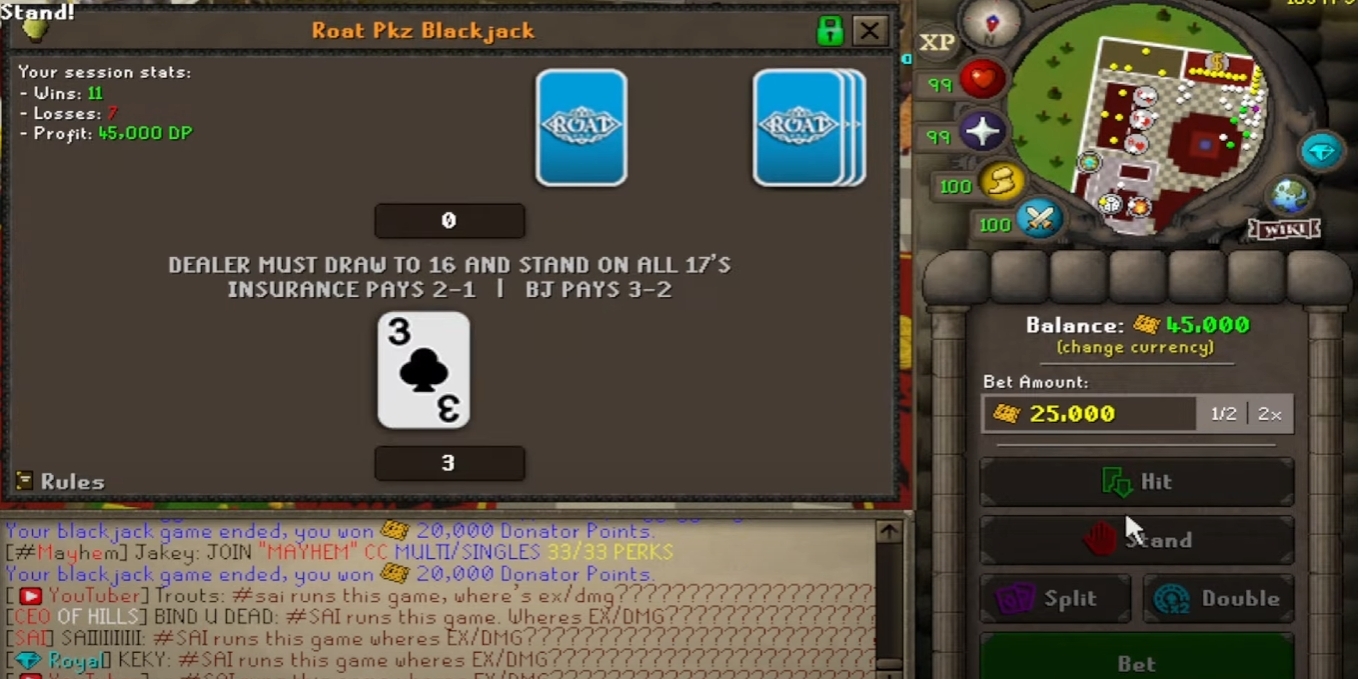
On July 1, 2025, RoatPkz introduced provably fair systems for in-game gambling. Players can use cryptographic hashes to check how outcomes were generated.
What is Provably Fair Gaming?
Provably fair systems combine client and server seeds so players can reproduce and check outcomes after the server seed is revealed. The main components are:
-
Client Seed: Chosen by the player, which can be changed at any time before betting.
-
Server Seed: Secretly held by the server but revealed at the end of the game.
-
Nonce: A unique number that ensures randomness for multiple rounds.
Each game round is tied to a hash derived from these seeds, which can be checked by the player using an open-source verifier to confirm that the results weren’t tampered with. This system has been implemented across multiple gambling systems, including Flower Poker, Dice, Mines, Blackjack, and Boxing.
How It Works
The verification process has three stages:
-
Before the game: The server publishes a hash of the server seed, which is only revealed after the round is completed.
-
During the game: Players can change their client seed and confirm it’s part of the hash.
-
After the game: The server reveals the actual server seed and nonce, allowing players to verify the results.
Reproducing a result gives players a way to check it against the published hash rather than relying solely on the server’s claims.
Quick Implementation for RSPS Owners
RoatPkz provides Java helpers for server owners implementing provably fair Flower Poker, Dice, or Blackjack. The helpers use no third-party dependencies and can be integrated into an existing server.
Why It Matters for Players
Players can check the seeds and reproduce an outcome with a verifier. That makes the result easier to inspect, though verification still depends on how the system is implemented.
Using verifiable outcomes
The tools also give other RSPS owners a starting point for adding result verification.
Server owners can review RoatPkz’s open-source tools when considering a similar implementation.
0 Comments
Recommended Comments
There are no comments to display.
Please sign in to comment
You will be able to leave a comment after signing in
Sign In Now